
Edukaizen

Menu
  • News
  • Hubbard
    • Hubbard 1D
      • Part 1: 1D Hubbard model
      • Part 2: Snake layout and fSWAP
      • Part 3: Qiskit and Fire Opal
      • Part 4: 120-qubit run
      • Part 5: Time-to-answer
      • Part 6: Tensor networks
      • Part 7: Majorana propagation
      • Part 8: Reading heatmaps
      • Part 9: Digital vs cold-atom labs
      • Part 10: Official Monoprop benchmark
    • Hubbard 2D
      • Part 1: 1D to 2D
      • Part 2: Cuprates
      • Part 3: 3×3
      • Part 4: Time
      • Part 5: 4×4
      • Part 6: 6×6 Fez
    • 2D Local Quantum Advantage
      • Deel 1: Doel en budget
      • Deel 2: Fermionmodel
      • Deel 3: Mapping en diepte
      • Deel 4: Pilots en shots
      • Deel 5: Foutmitigatie
      • Deel 6: 6×6-resultaten
      • Deel 7: Circa 20x
      • Deel 8: Google en Bonsai
      • Deel 9: Volgende stap
  • Hadron
    • Part 1: Hadron on a quantum processor
    • Part 2: Quarks and confinement
    • Part 3: SU(2) and LSH
    • Part 4: Hamiltonian and circuit
    • Part 5: Fire Opal
    • Part 6: Classical simulations
    • Part 7: Quantum advantage
  • Black Hole OLE
    • Part 1: What we ran
    • Part 2: How OLE works
    • Part 3: Fire Opal and Kingston
    • Part 4: The tensor-network challenge
    • Part 5: Hawking and scrambling
    • Part 6: What the result proves
    • Part 7: Local toy model
    • Part 8: QGSS26 compatibility
  • Random Graph
    • Start here
    • Part 1: Theory
    • Part 2: Circuit
    • Part 3: Qiskit
    • Part 4: Complexity
    • Part 5: Verification
    • Part 6: Workflow
    • Part 7: Conclusion
  • Floquet-Ising
    • Part 1: Floquet physics
    • Part 2: Ising cycle
    • Part 3: Two-qubit toy model
    • Part 4: Oscillation and entanglement
    • Part 5: Noise and error mitigation
    • Part 6: Toward 51 qubits
  • XXZham
    • Part 1: The XXZ model and imbalance
    • Part 2: From dynamics to a quantum circuit
    • Part 3: The classical simulation methods
    • Part 4: Error mitigation on real hardware
    • Part 5: Results and the classical comparison
    • Part 6: Original study and next steps
  • Nighthawk RCS 61q
    • Part 1: The paper
    • Part 2: Our IBM measurements
    • Part 3: MPS and advantage
    • Part 4: RCS theory and applications
  • Work
    • QOS QML
      • Tutorial: UMI counts to a four-qubit circuit
      • Part 1: The QML task
      • Part 2: QOS theory
      • Part 3: Gene expression to 40 qubits
      • Part 4: JAX to hardware
      • Part 5: Readout and classifier
      • Part 6: 40-qubit result
      • Part 7: Route to quantum advantage
      • Part 8: 60-qubit result
    • Quantum Gold
      • Part 1: Why gold is a relativistic quantum problem
      • Part 2: Why the 2025 gold VQE study stalled
      • Part 3: From QE and spin–orbit coupling to Qiskit
      • Part 4: Twelve gold spinor modes on four qubits
      • Part 5: The 24-qubit route: an active window for transport
      • Part 6: 24 qubits on IBM and with Fire Opal
      • Part 7: The road to quantum advantage for gold
      • Part 8: 24 gold spinor modes on IBM with ZNE-PEA
      • Part 9: Forced gold colour on 56 qubits
    • HaPPY Gravity
      • Part 1: Gravity as a phase gate
      • Part 2: Bosons and convergence
      • Part 3: The dynamic HaPPY benchmark
      • Part 4: The N=145 classical audit
      • Part 5: MPS and Majorana baselines
      • Part 6: PEA/ZNE and the decisive test
    • Fibonacci Anyons
      • Part 1: Fusion and braiding
      • Part 2: The 3/5/9-qubit ladder
      • Part 3: Why nine qubits were too deep
      • Part 4: Structure-aware simplification
      • Part 5: IBM hardware diagnostic
      • Part 6: Results and open questions
  • Advantage List
  • Contact
Menu

Quantum computing-nieuws — 11 september 2026

Posted on September 11, 2026September 11, 2026 by

Laatste berichten over quantum computing

Dagelijkse selectie van Google News voor 11 september 2026. De koppen linken naar de oorspronkelijke publicatie.

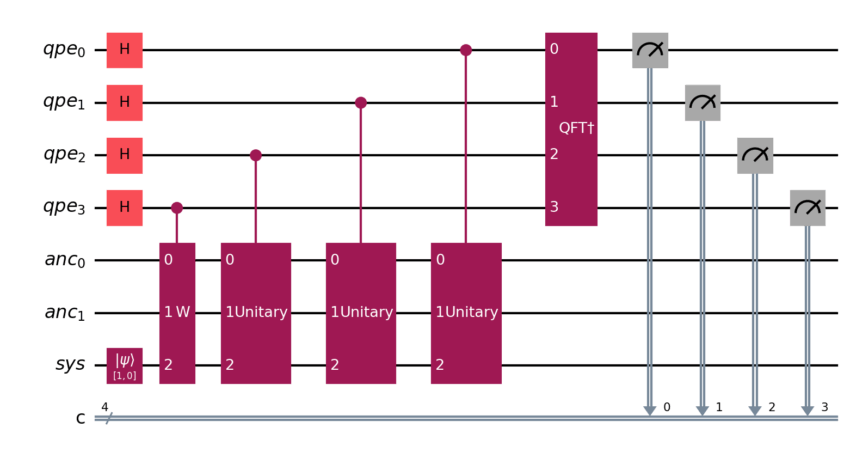
Quantumcircuit voor faseschatting
LUMI AI Factory kiest voor het fasetraject van IQM naar Europa’s eerste supergeleidende kwantumcomputer met logische qubits – Business WireBusiness Wire · Thu, 10 Sep 2026 22:22:00 GMT
Visualisatie van een quantumspintoestand
OrangeQS en Quobly versnellen quantum-opschaling – Dutch IT ChannelDutch IT Channel · Mon, 07 Sep 2026 10:00:20 GMT
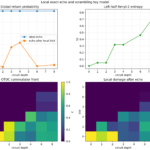
Diagnostische panelen van een lokaal quantum-scramblingmodel
TU Delft en Fujitsu bouwen prototype quantumcomputer met diamantspins – Techzine.nlTechzine.nl · Tue, 08 Sep 2026 07:00:00 GMT
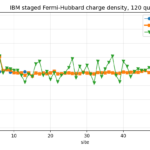
Ladingsdichtheidsmeting van een 120-qubit Fermi-Hubbard-run
Beleggen in quantumcomputing: de volgende stap in computertechnologie – Beleggers BelangenBeleggers Belangen · Mon, 29 Jun 2026 07:00:00 GMT
Illustratie van een verspreidende quantumpuls
Fujitsu bouwt eerste prototype van quantumcomputer met diamantspins – Dutch IT LeadersDutch IT Leaders · Tue, 08 Sep 2026 08:16:32 GMT
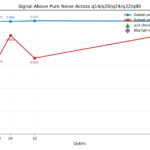
Quantumsignaal over verschillende systeemgroottes
Quantum Computing Inc.: koersdoel en analistenconsensus | QUBT | US74766W1080 – MarketScreener NederlandMarketScreener Nederland · Fri, 04 Sep 2026 07:00:00 GMT
Read this news in English

Automatisch samengesteld uit openbare bronnen. Edukaizen vat geen bronartikelen over; controleer de oorspronkelijke publicatie voor context en details.

Recent Posts

  • Quantum computing-nieuws — 25 september 2026
  • Quantum computing-nieuws — 18 september 2026
  • A Call to Qiskit Advocates: Help Test Quantum Advantage
  • Quantum computing-nieuws — 11 september 2026
  • Quantum computing-nieuws — 4 september 2026

Recent Comments

  1. XXZham: simulating 80 spins with a NISQ quantum computer - Edukaizen on XXZham: quantumsimulatie van 80 spins

Archives

  • September 2026
  • August 2026
  • July 2026
  • May 2026
  • March 2026
  • February 2026
  • September 2024

Categories

  • 10
  • Quantum Computing
  • Uncategorized
©2026 Edukaizen | Theme by SuperbThemes